

Start Your XML to Shopify Migration Today!
Move your store from XML to Shopify with a secure, guided migration tailored to your business.


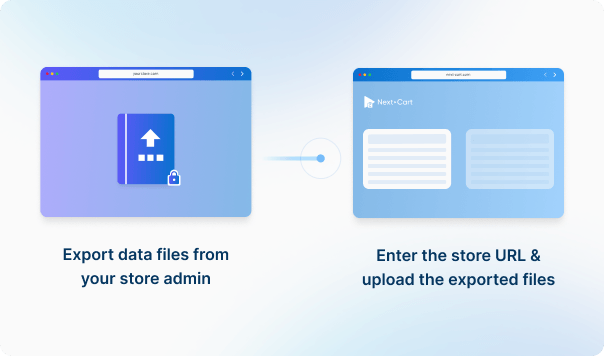
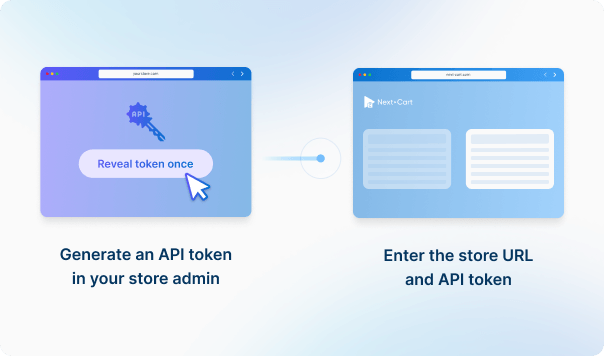
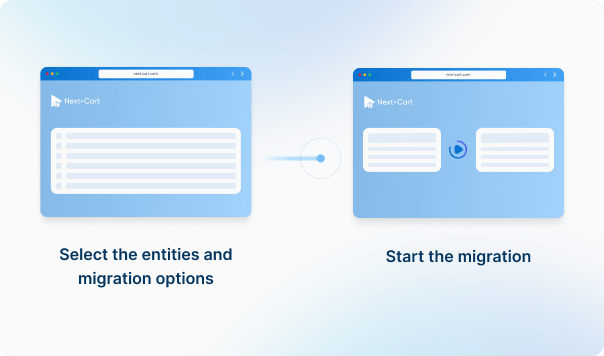
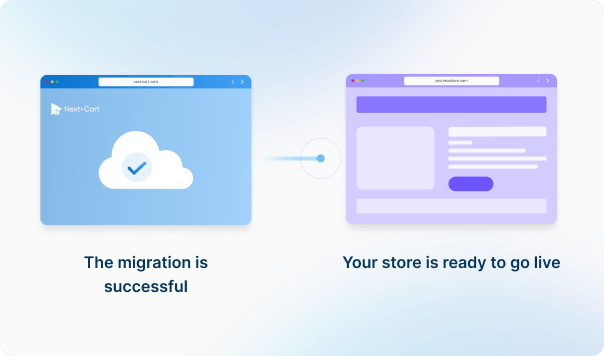


Upload the required data files to establish the connection.
Generate an API access token from your Shopify admin, then enter your store URL and API credentials to connect. This enables secure data transfer into your Shopify store.




 XML
XML Shopify
 XMLShopify

Before Full Migration, identify the URLs, CMS Pages, Blog Posts, and landing pages that matter most, then decide their Shopify destinations and redirect rules. Supported content can be migrated, but complex legacy navigation or extension-driven URLs may need extra planning. Validate priority pages and redirects in Demo Migration and again before go-live.
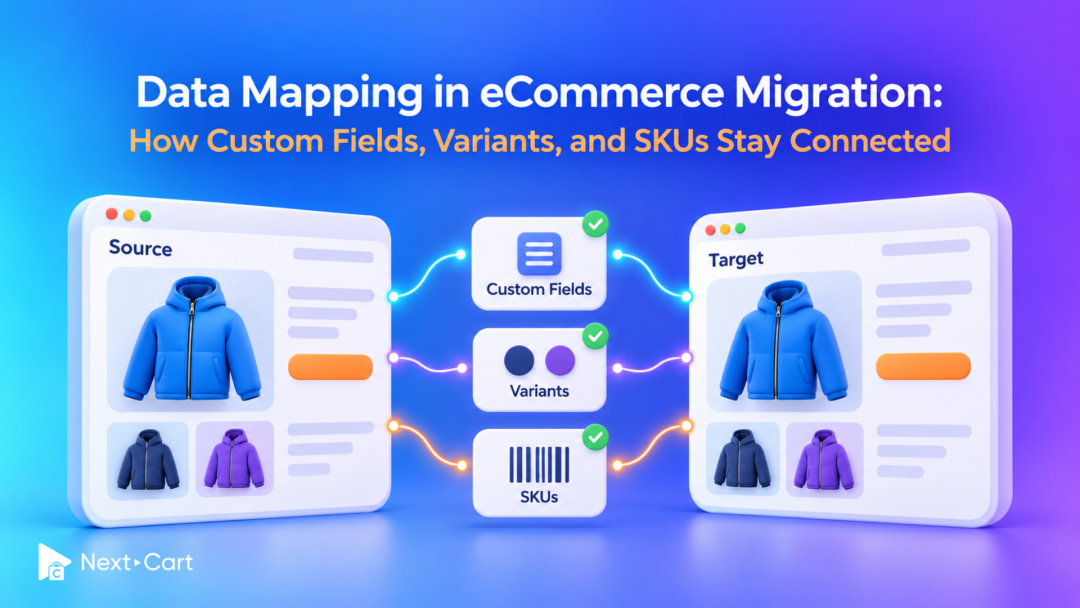
Supported values can be migrated or remapped when Shopify has a compatible destination. App-owned data, unsupported custom fields, external identifiers, loyalty/wholesale/subscription logic, or other source-specific behavior may require Custom Service review. Data migration does not automatically recreate the app, theme behavior, checkout workflow, or external integration in Shopify.
Shopify uses a defined product → option → variant structure. If your source products map cleanly to that model, Standard Service may be enough. Custom options, bundles, personalization, subscriptions, or other buying logic may need Add-ons, Shopify-side setup/apps, or Custom Service. Use Demo Migration to test a few of your most complex products before Full Migration.
Absolutely. Even though Gift Cards are not supported by the Shopify API by default and are not listed as a supported entity, we can customize your migration tool to import Gift Cards into your Shopify store.
Once imported, the Gift Cards will be associated with the respective customers and orders (if they were created by orders).
When a product is migrated, our tool automatically identifies and links it to related products that have also been migrated.
Additionally, we support migrating cross-sell and up-sell product relationships to ensure a seamless shopping experience.
Important: To accurately display related products on your storefront, please install the Shopify Search & Discovery app on your Shopify store before initiating the migration process.
Order notifications are disabled by the Shopify API by default, meaning no order confirmations will be sent to your customers during the migration.
If you're migrating data to Shopify:


Move your store from XML to Shopify with a secure, guided migration tailored to your business.