Next-Cart

QuickBooks to Shopify Migration

Migrate products, customers, and other supported store data from QuickBooks to Shopify securely and accurately while preserving data relationships throughout the transfer.
QuickBooksQuickBooks to Shopify MigrationShopify
Start Free Demo
No downtime, <br />No coding required
No downtime,
No coding required
Keep your store active during migration. No technical skills needed.
Free Demo Available
Free Demo Available
Preview a sample of your WooCommerce data on Shopify before running the Full Migration.
1-year License with <br />Recent Data Migration
1-year License with
Recent Data Migration
Keep your migration project available for 12 months and sync new or changed data with Recent Data Migration when needed.
24/7 <br />Technician Support
24/7
Technician Support
Get expert help with connections, configuration, migration issues, and validation whenever you need it.

Step-by-Step Guide to QuickBooks to Shopify Migration

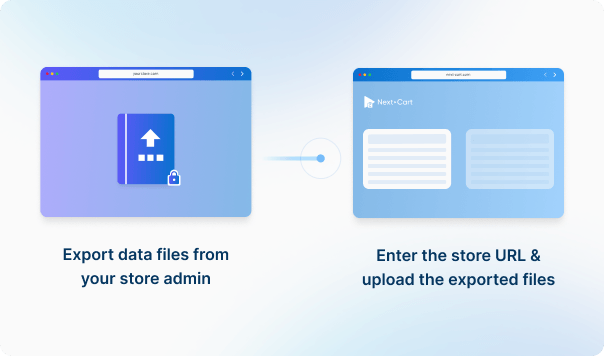
Connect your QuickBooks files
1
Connect your QuickBooks files

Enter your QuickBooks Commerce store URL and upload the required data files to establish the connection.

Step-by-Step Migration Guide
icon

Data You Can Migrate

Products
Product Categories
Customers
All relationships (categories, variants, images, etc.) preserved

Customize your setup with additional options Customize your setup with

Recent Data Migration
Clear Target Store Data
Strip HTML Tags from Category and Product Names
Transfer Embedded Images to Target Store
Create 301 Redirects for SEO URLs
Compatibility Overview
QuickBooksQuickBooks
ShopifyShopify
Version Rangetooltip
Simple Start, Essentials, Plus, Advanced
All Shopify Online Store
Main Editionstooltip
QuickBooks Admin Site
Shopify Basic, Shopify Grow, Shopify Advanced, Shopify Plus
Language & Localization
-
Multilingual, Multicurrency, RTL, Localized URLs
Product Types: Simple Product, Variable Product, Virtual Product
Product Information: Name, SKU
Product Pricing : Regular Price, Sale Price
Product Images: Main image, Gallery Images, Images in Description
Product Inventory : Manage Inventory, Stock Status
External Links / Relationships : Categories
Product Attributes & Custom Fields : Values
Product SEO / Structured Data: Meta Title, Meta Description, URL Path
Category Information: Name
Customer Information : First Name, Last Name, Email, Phone, Date Created
QuickBooksQuickBooks
ShopifyShopify
Product Typestooltip
Simple Product
Simple Product
Product
Variable Producttooltip
Variable Product
Product Variants
Virtual Product
Virtual Product
Digital Product
Name
Name
Title
SKU
SKU
SKU
Regular Price
Regular Price
Price
Sale Price
Sale Price
Price (when Compare-at exists)
Main image
Main image
Featured Image
Gallery Images
Gallery Images
Media
Images in Description
Description
Manage Inventory
Manage Inventory
Track Quantity
Stock Status
Stock Status
Availability
Categories
Categories
Collections
Values
Values
Values
Meta Title
Meta Title
Page Title
Meta Description
Meta Description
Meta Description
URL Path
URL Path
URL and Handle
Category Information
Name
Name
Title
Customer Information
First Name
First Name
First Name
Last Name
Last Name
Last Name
Email
Email
Email
Phone
Phone
Phone
Date Created
Date Created
Created At

Estimate your Migration Cost

A clear, step-by-step workflow where our technicians handle everything.

You only review the final result—we take care of the rest.
1. Service
2. Data Volume
Source Platform
QuickBooks
Target Platform
Shopify
Products
Customers
Orders
Blog posts
Custom jobs
+$100
ESTIMATED TOTAL ESTIMATED BASE PRICE
$0
Pricing includes AWS architectural fees.
Standard Migration Source → Target
Migration Path
Source Platform ...
Target Platform ...
Data Volume
Total Data Records 0
Entity Points 0
Plan -
Service Standard Migration
0 0

Frequently Asked Questions

How should I protect SEO and important URLs when migrating to Shopify?

Before Full Migration, identify the URLs, CMS Pages, Blog Posts, and landing pages that matter most, then decide their Shopify destinations and redirect rules. Supported content can be migrated, but complex legacy navigation or extension-driven URLs may need extra planning. Validate priority pages and redirects in Demo Migration and again before go-live.

Supported values can be migrated or remapped when Shopify has a compatible destination. App-owned data, unsupported custom fields, external identifiers, loyalty/wholesale/subscription logic, or other source-specific behavior may require Custom Service review. Data migration does not automatically recreate the app, theme behavior, checkout workflow, or external integration in Shopify.

Shopify uses a defined product → option → variant structure. If your source products map cleanly to that model, Standard Service may be enough. Custom options, bundles, personalization, subscriptions, or other buying logic may need Add-ons, Shopify-side setup/apps, or Custom Service. Use Demo Migration to test a few of your most complex products before Full Migration.

Absolutely. Even though Gift Cards are not supported by the Shopify API by default and are not listed as a supported entity, we can customize your migration tool to import Gift Cards into your Shopify store.

Once imported, the Gift Cards will be associated with the respective customers and orders (if they were created by orders).

When a product is migrated, our tool automatically identifies and links it to related products that have also been migrated.

Additionally, we support migrating cross-sell and up-sell product relationships to ensure a seamless shopping experience.

Important: To accurately display related products on your storefront, please install the Shopify Search & Discovery app on your Shopify store before initiating the migration process.

Yes. When you migrate products from your online store to Shopify, you can specify the tax percent you want to add to your product price.

*Note: if you want to manually set up auto-taxes for your Shopify store, you should skip this option.

Order notifications are disabled by the Shopify API by default, meaning no order confirmations will be sent to your customers during the migration.

If you're migrating data to Shopify:

  • It's highly recommended to disable all third-party shipping and email apps on your Shopify store before starting the migration.
  • Please do not enable Storefront API when you create the Shopify API custom app.
  • Admin users will still receive email notifications. If needed, you can disable these in Settings > Notifications > Staff notifications.
icon
icon

Start your QuickBooks to Shopify Migration today!

Move your store from QuickBooks to Shopify with a secure, guided migration tailored to your business.


Banner