

eCommerce migration does not just mean changing a website. It involves moving between platforms, such as migrating from Shopify to WooCommerce, or Magento,…. It also includes restructuring URLs, rebuilding the frontend, upgrading backend systems, or adopting new technologies to support growth as well.
In the AI era, what should you know if you want to migrate an eCommerce store? How to fully preserve your ranking? What do you need to prepare for a safe migration? Let’s find out with Next-Cart below!
- Why is SEO migration riskier in the AI era than ever before?
- How AI has changed SEO and why migration needs a new mindset
- Types of eCommerce migrations
- Platform migration (High risk)
- URL structure change
- Frontend or theme rebuild
- Backend, hosting, or technology changes
- SEO eCommerce migration – A practical guide in 2026
- Pre-Migration SEO strategy: The phase that determines success or failure
- SEO and content audit before migration
- URL mapping strategy beyond simple redirects
- Content preservation and intent alignment
- Technical SEO foundations that AI search relies on
- Site structure and internal linking
- Core web vitals and performance signals
- Structured data
- Indexation control
- Migration day: What must be checked in real time
- Post-Migration SEO: From recovery to growth
- Common SEO migration mistakes in the AI era
- Treating migration as a technical task only
- Deleting “low-traffic” pages
- Ignoring internal linking
- Launching without baselines
- When professional SEO migration support becomes necessary
- Conclusion
Why is SEO migration riskier in the AI era than ever before?
Ecommerce migration is the process of moving an entire online store from its old platform to a new one. This can include changing domains, restructuring URLs, redesigning site architecture, or upgrading the underlying technology stack. While migrations are often necessary for growth, scalability, or performance, they have long been one of the most common causes of sudden SEO traffic loss.
Currently, search engines are no longer simple ranking systems that match keywords to pages. They are increasingly AI-driven systems that interpret, summarize, and recommend content based on context and trust. And Next-Cart designs this guide to help eCommerce teams understand why SEO migration today requires more than technical precision. It requires a strategic approach focused on preserving meaning, authority, and visibility in AI-driven search environments.
How AI has changed SEO and why migration needs a new mindset
Traditional SEO quite focused heavily on keywords, exact-match URLs, and page-level optimization. While these elements still matter, AI-driven search has now paid attention much more on intent, context, and semantic relationships.
AI evaluates websites as ecosystems, looks at how category pages support product pages. It cares about how informational content reinforces commercial intent, and how internal links signal topical authority. User experience, engagement patterns, and content depth all feed into this understanding.
For example, a category page for “running shoes” may still exist after migration. But if its supporting blog content, internal links, and subcategories are removed or reorganized poorly, AI systems may no longer recognize it as an authority page. The URL survives, but its meaning does not.
This is the core mindset shift migration requires today. The goal is not just to “move”, it is about preserving understanding.
Types of eCommerce migrations
But not all eCommerce migrations disrupt SEO in the same way. If you have the right strategy for migrating, you can avoid this risk.
The real risk lies not only in what changes, but in how much semantic continuity is broken during the process. In the AI era, search systems measure risk based on structural, contextual, and behavioral disruption rather than URL changes.
There are most common types of eCommerce migration:
Platform migration (High risk)
Example: Migrate from Magento → Shopify, Migrate WooCommerce → Shopify Plus.
Platform migrations almost always perform structural changes:
- Different URL generation logic
- Different handling of product variants, filters, and pagination
- Changes in internal linking depth and hierarchy
From an AI perspective, this often looks like a new website wearing an old domain. Even with perfect redirects, AI systems may need time to reassess content relationships, topical authority, and behavioral signals.
URL structure change
Example:
/collections/running-shoes → /shoes/running/
URL structure communicates hierarchy. When it changes, AI must reinterpret how content is organized and which pages are central.
You can find it is not as serious as that. But even if content remains identical, altered URL paths can weaken topical clustering if not carefully mapped.
Frontend or theme rebuild
People tend to underestimate frontend rebuilds. Content may still exist, but semantic and UX signals change. And even small changes can significantly affect the way AI evaluates user experience. And they are these changes below:
- HTML structure
- Heading hierarchy
- Internal link placement
- Page load behavior.
Backend, hosting, or technology changes
These migrations rarely change content directly, but they affect performance, stability, and crawl efficiency of Google. In AI-driven ranking systems, performance is increasingly tied to trust and satisfaction signals.
SEO eCommerce migration – A practical guide in 2026
Next-Cart gives you a reference migration guide that you can follow to migrate eCommerce stores smoothly.
Pre-Migration SEO strategy: The phase that determines success or failure
Most SEO losses during migration are decided before any data is moved. Pre-migration strategy determines whether the new site inherits authority or starts rebuilding from scratch.
This phase is not about creating checklists. It is about defining what must be preserved at all costs and what can safely evolve. This will help you to have a great preparation for migrating.
SEO and content audit before migration
A proper audit goes beyond identifying high-traffic pages. It maps how content works together. Top-performing category pages often depend on supporting informational content that clarifies intent and reinforces relevance.
AI prioritizes topical clusters rather than isolated URLs. If migration preserves individual pages but breaks these clusters, authority will be weakened even if traffic pages technically survive.
URL mapping strategy beyond simple redirects
Effective URL mapping is one-to-one, intentional, and selective. Redirects should only exist when the new page truly replaces the old one. Redirect chains and soft 404s can confuse AI systems.
In contrast, clean and logical URL structures help AI understand hierarchy. When URL paths reflect clear relationships between categories and products, search systems can re-establish context more efficiently after migration.
Content preservation and intent alignment
Not all content should be rewritten during migration. Pages that already match search intent and perform well should remain stable. Optimization should focus on clarity, structure, and semantic signals rather than radical change.
AI highly appreciates consistency in meaning. Sudden shifts in tone, purpose, or content focus can trigger re-evaluation, even if the page still exists.
Technical SEO foundations that AI search relies on
Technical SEO during migration should support how AI reads and interprets the site, not just how it crawls it.
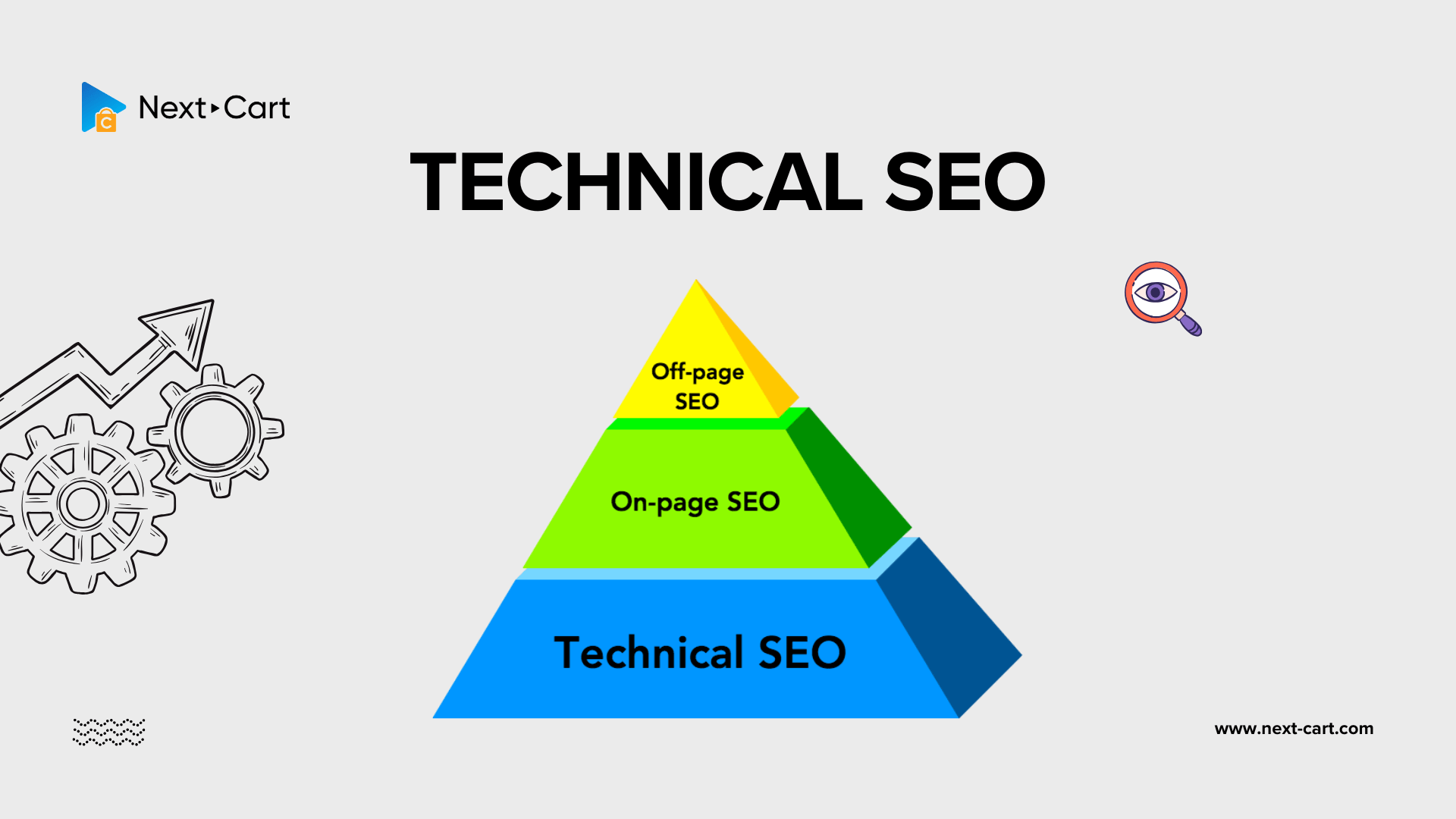
Discover the technical SEO
Site structure and internal linking
Clear category-to-product relationships, breadcrumbs, and contextual internal links tell AI what matters most. AI systems analyze these relationships to understand topical depth and authority. Internal links act as semantic connectors, reinforcing how concepts relate rather than simply showing authority.
During migration, these signals are often unintentionally weakened. Flattened structures, removed breadcrumbs, altered category paths, or replaced internal links may not break crawling, but they disrupt relational meaning. Thus, AI systems struggle to determine which pages represent core topics. It becomes harder to identify relevance, even if rankings initially remain unchanged.
Core web vitals and performance signals
Performance is no longer optional anymore. Metrics such as LCP, CLS, and INP influence user satisfaction signals that AI increasingly values. Migration choices around hosting, themes, and scripts directly affect these metrics.
AI systems interpret consistent performance as a measure of quality and reliability. Sites that load smoothly, maintain a stable interface, and respond quickly indicate lower friction and higher user satisfaction. Over time, these signals influence the level of trust that a website receives in recommendations and summaries.
Migration decisions directly impact these metrics. Changes in hosting infrastructure, platform rendering logic, theme frameworks, script loading order, or third-party integrations can significantly affect performance. Even small degradations across many pages can accumulate into site-wide signals that AI models associate with lower experience quality.
Structured data
Product schema, breadcrumb markup, and FAQ schema help AI interpret content meaningfully. Canonicals, robots.txt, and sitemaps ensure that AI focuses on the right pages instead of wasting crawl budget on noise.
During migration, structured data is frequently lost, altered, or misaligned with new templates. Even when content remains unchanged, missing or inconsistent schema forces AI systems to rely more heavily on inference, increasing the risk of misinterpretation.
Indexation control
Indexation control is equally crucial. Canonical tags, robots directives, and XML sitemaps guide AI toward authoritative pages and away from duplicates, parameter noise, or transitional URLs created during migration. Without clear indexation signals, AI systems may waste resources interpreting low-value pages, diluting the semantic focus of the website.
In an AI-driven search environment, technical SEO defines what information is emphasized, trusted, and reused. Migration that overlooks these foundations may preserve access, but it undermines understanding. And when understanding weakens, so does the visibility.
Migration day: What must be checked in real time
Migration day is not about completing a checklist, but about protecting how your site is understood from the very beginning.
Indexation and visibility
On the day of migrating, this day is when search engines and AI systems start forming their first interpretation of the new site. All core pages must be indexable, while staging URLs, duplicate paths, and internal search pages should remain blocked. A single misplaced no-index tag or incorrect canonical can remove revenue-driving pages from search results within hours.
Redirect accuracy directly affects authority transfer
High-value URLs must resolve cleanly to their most relevant new destinations. Redirect chains, fallback redirects to category pages, or blanket redirects to the homepage weaken relevance signals and dilute authority. Even when redirects technically function, inconsistent mapping can confuse AI systems that are trying to connect historical signals with the new content structure.
Crawl errors and server stability
During the first crawl cycle, spikes in 404 errors, soft 404s, or slow server responses reduce crawl efficiency. When AI-driven crawlers struggle to access product and category pages, those URLs may be deprioritized early, delaying indexation and recovery.
Performance and rendering issues can shape early ranking signals
Theme changes, script loading, and hosting configurations often impact Core Web Vitals after migration. Poor load speed or layout instability in the first days after launch can negatively affect engagement signals, which AI systems increasingly use to assess content quality and relevance.
Post-Migration SEO: From recovery to growth
Migration success is not defined by “traffic didn’t drop.” It is defined by how quickly the site regains stability and whether it emerges stronger.
What to expect in the first 30 days
Some fluctuation is normal. Persistent drops in impressions, disappearing rich results, or loss of category visibility are not. Search Console and analytics must be monitored with context, not panic.
Adapting content for AI search visibility
Post-migration is an opportunity to strengthen topical authority. Expanding supporting content, improving internal links, and clarifying intent help AI re-evaluate the site positively.
Common SEO migration mistakes in the AI era
Most SEO migration failures do not result from technical bugs. They are caused by misunderstanding how AI interprets change.
Treating migration as a technical task only
One usually seen mistake in migration is only focusing on technical tasks. When SEO is reduced to redirects and sitemaps, the site may remain crawlable but lose its meaning. AI evaluates context, not just accessibility.
When migration focuses only on technical continuity, the site may remain crawlable but lose its semantic structure. Categories may no longer clearly support products. Informational pages may lose their contextual role, and content clusters may become fragmented. As a result, AI systems struggle to understand what the site is truly authoritative about, even if all pages are technically reachable.
Deleting “low-traffic” pages
The second popular mistake is removing pages simply because they generate little or no direct traffic. Many low-traffic pages play a role as supporting content that reinforces topical authority. They answer long-tail questions, explain use cases, or provide contextual depth around core categories. When these pages disappear during migration, AI systems lose the supporting signals that help validate the relevance and expertise of the main commercial pages. Over time, this can weaken rankings for high-traffic pages, even though those pages themselves were never removed.
Ignoring internal linking
Internal linking is one of the primary ways AI understands relationships between pages. When internal links are removed, flattened, or randomized, AI loses clarity about which pages are central and which are supportive. As a result, rankings slowly decline weeks after migration when AI systems re-evaluate the site’s internal logic and authority distribution.
Launching without baselines
Last but not least, without benchmarks for rankings, indexed pages, traffic by template, and internal linking depth, it becomes impossible to diagnose problems accurately. This often leads to delayed responses, incorrect fixes
When professional SEO migration support becomes necessary
SEO migration becomes high-risk when complexity exceeds internal expertise. You should consider professional support when:
- Product catalogs exceed thousands of SKUs
- Involve multiple languages or regions
- Faceted navigation and filters drive organic traffic
- Use custom CMS or headless architectures
In these cases, migration errors are rarely obvious immediately, but their impact compounds over time. If migration causes you sleepless nights of stress, please contact Next-Cart. Our seasoned technicians team will support you until you complete the migration successfully.
Conclusion
In the AI era, SEO migration is about preserving understandability. Rankings are a byproduct of this understanding. When migration preserves meaning, rankings follow. When it does not, recovery is slow and uncertain. This is exactly how AI operates.
In this article, Next-Cart helps you understand and know more about migration. SEO is a key factor of business growth and Next-Cart hopes that this article is helpful to your business.