
- The death of cookies and the CAC crisis
- Strategy 1: The “give to get” value exchange
- Strategy 2: AI-driven hyper-personalization
- Strategy 3: Building community through data
- Technical challenge: Is your backend ready for zero-party data eCommerce?
- Next-Cart perspective: Clean migration as the foundation
- In summary,
The death of cookies and the CAC crisis
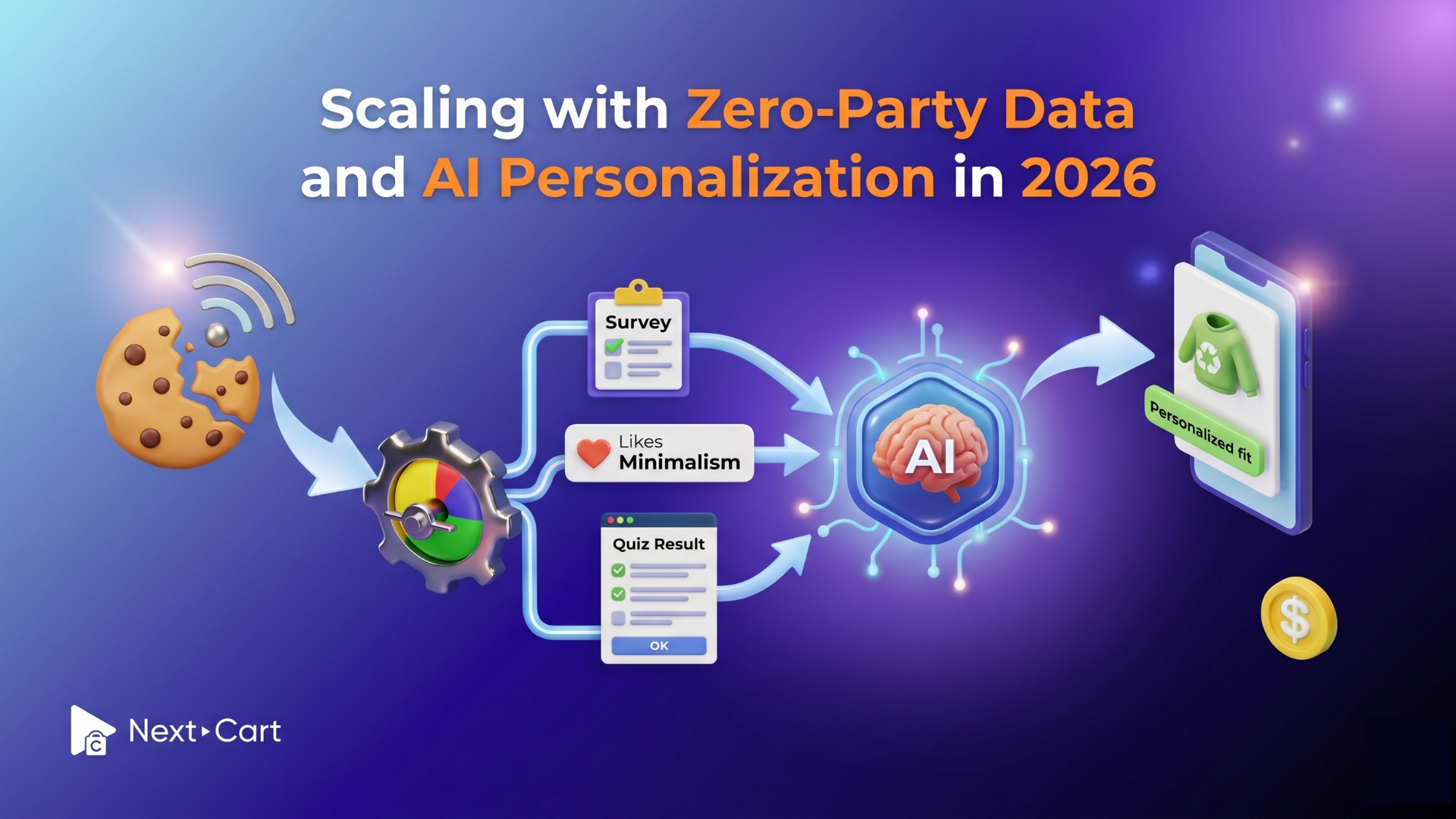
For years, eCommerce brands relied on third-party cookies and retargeting ads to stay visible in the digital marketplace. But that era has ended, as data privacy 2026 regulations have tightened globally. Browsers have now eliminated third-party tracking, and users have become more aware of how their data is used.
As a result, the customer acquisition cost (CAC) falls into a risk. Paid advertising channels that once delivered predictable returns are now inefficient and expensive. Brands end up spending more to acquire customers who convert less frequently and remain less loyal. Similarly, the restargeting campaigns now feel like guesswork.
This shift has exposed a fundamental weakness in the traditional eCommerce growth model: it was built on rented attention rather than owned relationships.
Enter zero-party data eCommerce, it flips the model on its head. It no longer infers customer intent through behavioral tracking. Zero-party data captures customers’ intentional, proactive sharing, including customers’ preferences, purchase intentions, and personal contexts.
This is not another category of data. It is a philosophical shift.
When a customer tells you exactly what they want, you no longer have to rely on assumptions or have to chase. You now listen to them and understand them.
And in a world where privacy is paramount and acquisition is expensive, ownership becomes the ultimate competitive advantage. Brands that own their customer relationships through trust, transparency, and meaningful data exchange will protect and expand their profit margin in 2026.
Finally, the question is no longer how to track customers better. The question should be: how to create an environment where customers want to tell you their story.
Strategy 1: The “give to get” value exchange
At the heart of zero-party data eCommerce lies a simple principle: value must be exchanged.
Customers are not opposed to sharing information. What they resist is sharing it without purpose. If the experience feels invasive or one-sided, they refuse. But when seeing a clear benefit that sharing data leads to better outcomes, they will participate willingly.
This is called the “Give to Get” strategy.
Saying NO to long forms or passive tracking, brands are now designing interactive, engaging experiences to collect data. They could be quizzes, preference centers, onboarding flows, and personalized profiles. These experiences are becoming the new front doors of eCommerce.
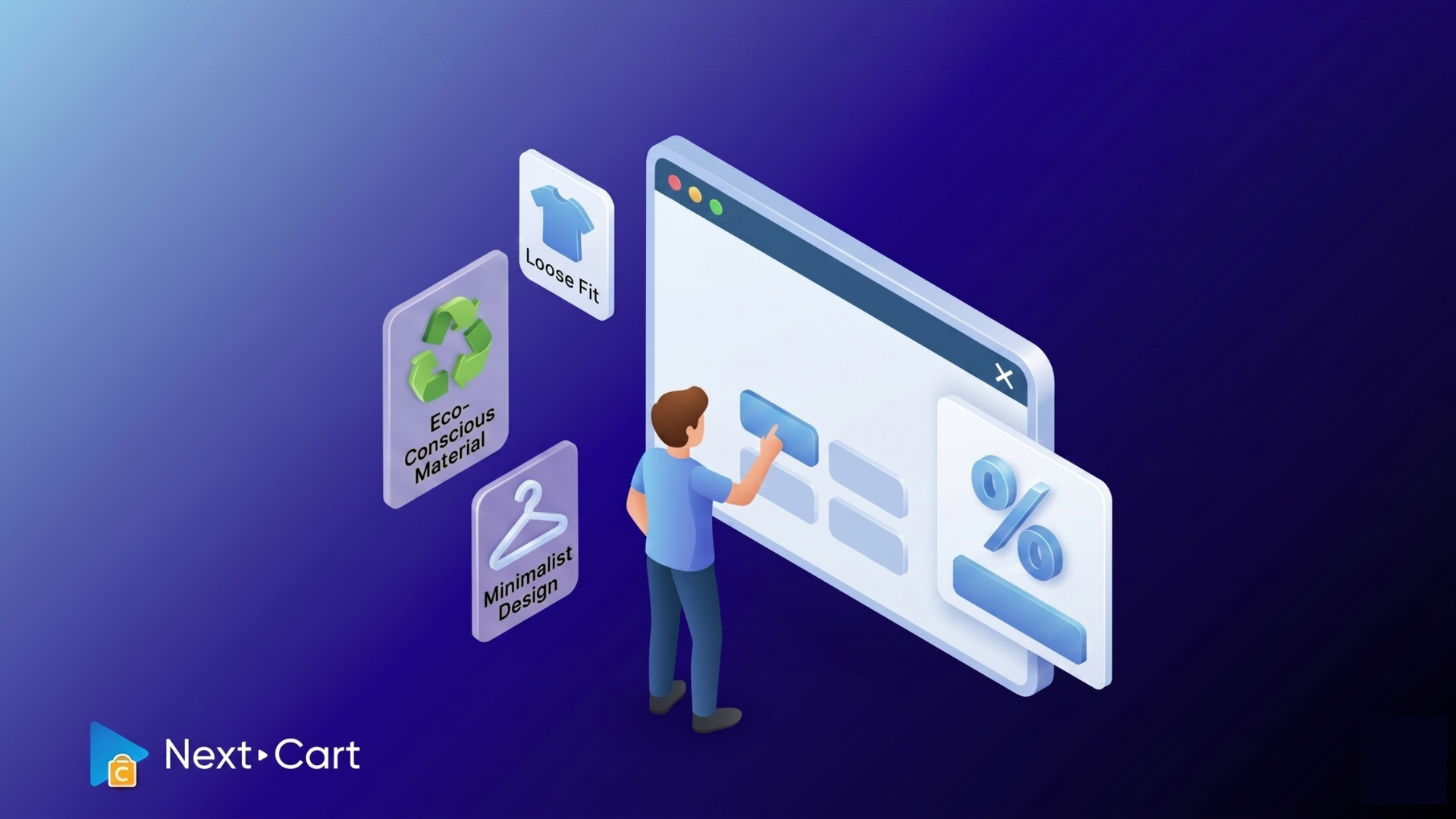
Imagine a skincare brand designing a “Find Your Perfect Routine” quiz. This quiz gives customers a series of engaging questions about their skin type, concerns, and lifestyle. In turn, they receive a tailored regimen designed specifically for them.
What seems like such a simple quiz is, in reality, a powerful data engine. With the valuable data obtained, the brand now understands what customers buy and why. In particular, customers are pleased to share with the brand.
Gamification takes this even further by turning the data-collection step into a rewarding experience with progress bars, instant feedback, and personalized results. Through these experiences, brands can gather deeper insights without friction. Customers feel guided instead of interrogated.
At the same time, forward-thinking brands are building preference centers – dynamic dashboards letting customers update their interests and shopping intentions over time. This customer retention strategy reinforces a sense of control and transparency.
Transparency is non-negotiable. Customers need to know what their data is being collected and how it will be used. Also, they need a clear idea of what they can gain in turn. That’s why brands need to provide clear messaging and visible privacy control. And respectful communication also powers zero-party data eCommerce to build trust.
This approach makes data collection a collaborative process. Then, there is no need for brands to extract information. Instead, they can co-create value with customers.
Strategy 2: AI-driven hyper-personalization
Collecting zero-party data is only the beginning of the whole process. Its true value comes out when this data is paired with AI personalization engines to interpret, adapt, and respond in real time.
Traditional personalization in eCommerce was often limited to basic recommendations, such as “People also bought” or “You may like.” These systems often lacked context and relied heavily on aggregated behavior.
In 2026, AI personalization has evolved into a dynamic, predictive system. When fueled by zero-party data, it goes beyond patterns to achieve more precision, shaping entire customer journeys.
Consider a returning customer who has previously shared their style preferences and upcoming life events, like preparing for a wedding or planning a seasonal wardrobe update. When they revisit your store, the homepage can adapt accordingly: the layout highlights relevant categories; product recommendations align with stated preferences; messaging reflects their context; and colors, models, and styling can shift to resonate more deeply.
Email and SMS marketing have also become significantly more effective thanks to this AI-driven hyper-personalization. Instead of batch campaigns for broad categories, brands can send individually crafted messages. For example, a customer who has expressed interest in sustainable materials will receive updates on eco-friendly collections. Or someone who is preparing for their travels will receive curated packing suggestions.
Then, timing becomes more intelligent, as AI can anticipate when a customer will need a product again and when a specific offer will resonate most. The result is a dramatic increase in relevance that finally drives conversion.
More importantly, this system strengthens the relationship between customers and brands. Customers feel understood, and the brand becomes less of a seller and more of a guide and partner.
In hyper-personalization, you don’t just show the right product, but show that you understand each user behind the purchase.
Strategy 3: Building community through data
While powering personalization to drive individual experiences, zero-party data also enables something powerful: community.
When customers share their preferences and identities, they are not just providing data points. Beyond that, they are signaling their desire to belong. Being aware of this, brands can create ecosystems that go far beyond transactions.
One of the most effective approaches is creating member-only experiences. These could be exclusive product drops, early access to collections, or curated content for specific customer segments. Built on declared preferences through zero-party data, these experiences feel relevant and rewarding.
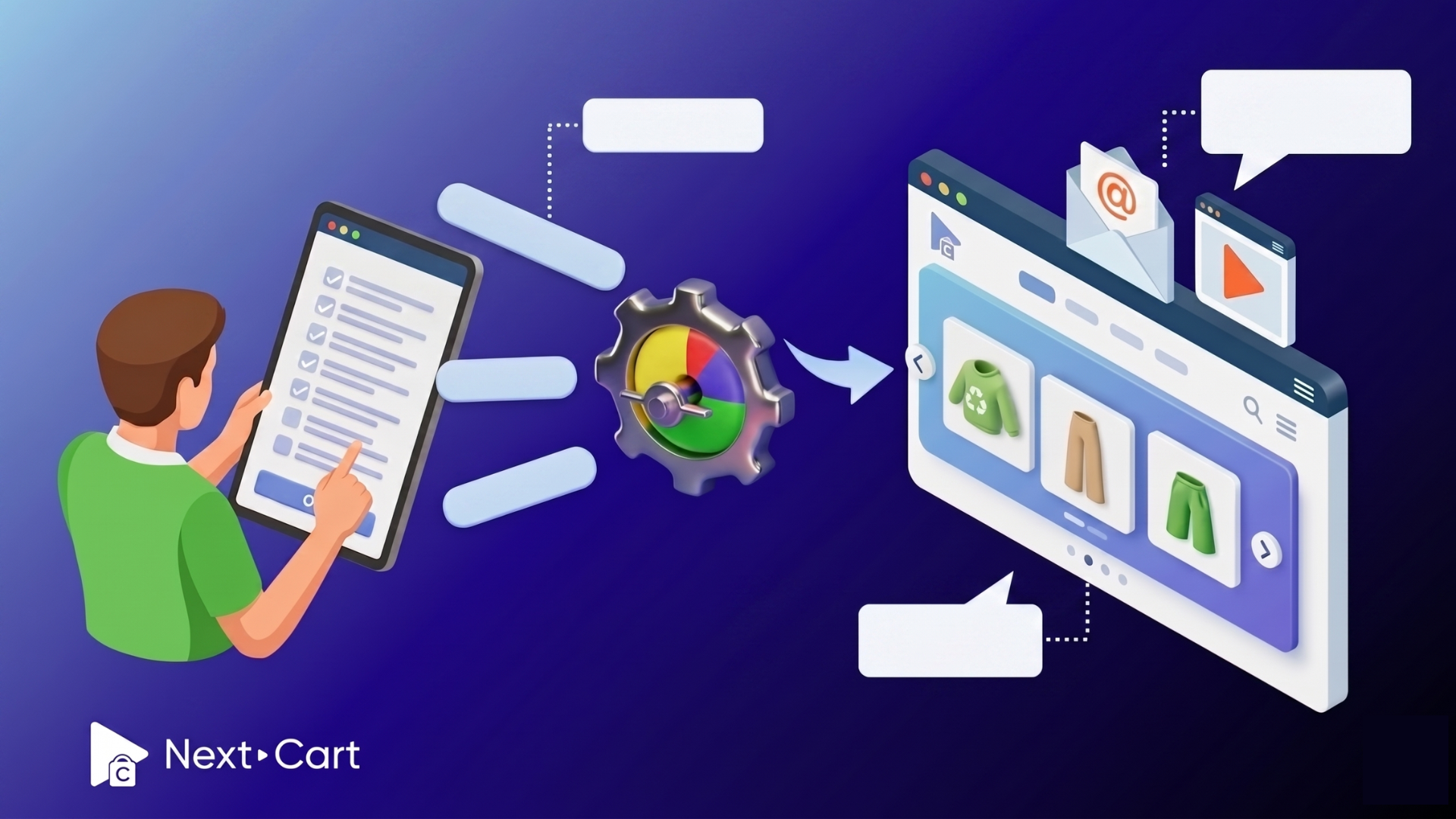
For example, a fashion brand might create micro-communities based on style profiles, such as minimalist, streetwear, formal, and sustainable. Each group receives unique content, recommendations, and offers for their identity. As a result, this sense of belonging increases customer engagement and loyalty to the brand.
On the other hand, zero-party data also helps reduce return rates. By understanding precise customer preferences and identities, including their size, fit, material sensitivities, and usage context, brands can guide them toward better purchase decisions up front, preventing wrong choices. Over time, returns decline, margins improve, and trust increases.
But perhaps the most significant impact is emotional. Customers stay with brands that “get them.” When brand interactions consistently reflect customer preferences and needs, the relationship deepens. As a consequence, loyalty programs are not only points-based systems but experience-based ecosystems. Data becomes the foundation of that loyalty, serving as a shared language between the brand and customers.
Technical challenge: Is your backend ready for zero-party data eCommerce?
As compelling as zero-party data eCommerce strategies are, having the right infrastructure becomes increasingly critical.
Legacy systems often have data fragmented across multiple tools through CRM platforms, email marketing software, analytics dashboards, and storefront databases. This infrastructure creates data silos that prevent a unified understanding of customers. In such environments, even the most valuable data loses its impact.
A customer might complete a preference quiz. But if that information is not accessible to the personalization engine or marketing platform, it cannot be activated. The insights obtained remain trapped, and opportunities to build personalization and community are lost.
This is why the concept of a Unified Customer Profile (UCP) has become essential in 2026. A UCP consolidates all customer data, including transactional, behavioral, and zero-party, into a single profile. It provides a holistic view that AI systems can leverage to deliver meaningful customer experiences.
To achieve an effective UCP, modern, API-first architectures are essential. API-first platforms allow different systems to communicate seamlessly. Then, data can flow in real time between your storefront, marketing tools, and AI engines.
Without this foundation, zero-party data strategies become disconnected.
Flexibility is crucial for scaling personalization efforts. And the backend is no longer just a support system – this engine determines whether your data strategy succeeds or fails.
Next-Cart perspective: Clean migration as the foundation
From the perspective of an eCommerce migration expert, we see that before any data strategy, there is a fundamental question to ask: Is your data clean, structured, and ready to be used?
Years of operating across different platforms cause online stores to accumulate inconsistent records and integrate multiple unnecessary tools. These records and tools often result in messy databases of duplicate customer profiles, incomplete data fields, and incompatible formats. All al of this data creates friction and limits the effectiveness of any personalization effort.
This is where migration can become the answer.
At Next-Cart, we view data migration as a strategic opportunity. It is the moment to reorganize and standardize data, and future-proof your customer data.
A successful migration not only preserves historical data but also optimizes it. After the migration, customer records must be structured to support unified profiles. Product data must be aligned with modern systems. And relationships between datasets are maintained and enhanced.
This precision is essential for AI readiness. When your data is clean and accessible, AI tools can operate at full capacity. Personalization, insights, and automation become more accurate and actionable.
Equally important is seamless transition. Upgrading to a new platform should not disrupt your business operations or compromise data integrity. The right migration expertise and platform infrastructure will help execute this process efficiently. Then, you will move forward while maintaining momentum.
In a digital landscape where data drives eCommerce business profitability, the quality of your foundation determines your growth.
In summary,
The eCommerce industry in 2026 is defined by a clear divide. On one side are brands still chasing customers through advertising channels and relying on assumptions. These businesses often struggle with rising costs and declining returns.
On the other side are brands embracing a different approach: not chasing, but listening. They use zero-party data eCommerce strategies, creating value exchanges to build direct relationships with their customers. Specifically, they use AI personalization to deliver intuitive and relevant experiences. They leverage data to foster loyalty, reduce costs, and increase profitability.
This shift has redefined how eCommerce businesses grow: from tracking to listening and from renting attention to owning relationships. Businesses can then activate customer data without relying on external systems.
And it is the foundation of sustainable eCommerce profitability in the years ahead.
Ready to own your customer relationships? Upgrade your platform with Next-Cart and start building your zero-party data empire today.