
“I’ve seen this pattern too many times.”
Having been a technician at Next-Cart for many years, I work directly with eCommerce store owners and understand their migration journey.
From my experience, almost none of them come to us saying, “I want to change my platform.” Instead, they usually say something like: “Sales are okay, but growth feels harder”; “We keep fixing things”; “ Something feels wrong, but what is the main problem?”
“Something feels wrong” is where most migrations actually begin.
After supporting hundreds of store migrations at Next-Cart, I see this pattern take place over and over again. It almost never starts with a dramatic failure, like a site crash or a security breach. But it starts quietly with small frustrations that are easy to ignore at first.
For example, I often see store owners reach out to us, sharing their concerns, like:
- A page loads a bit slower than it used to.
- A feature that is normally simple, but then needs a developer.
- More apps are needed, but revenue stays flat.
When considered individually, these issues don’t seem serious. But together, they can limit growth slowly.
In this article, I would like to share my perspective from a technical standpoint. I have summarized the early warning signs that merchants often miss and how experienced businesses know when to stay and when to move forward.
Switching platforms is for sure not about trends’ sake. It’s about recognizing when the current platform no longer matches your business.
Read more:
Preparing for Peak Season: When Is the Best Time to Migrate Your Store?
The first warning signs merchants usually ignore
The most dangerous platform problems often blend into daily operations and don’t announce themselves loudly. For example, a store is doing “fine” with steady traffic, running ads, and orders coming in, but its conversion rates stop improving. This issue has been happening for months and years.
Here are the early signals that merchants often overlook:
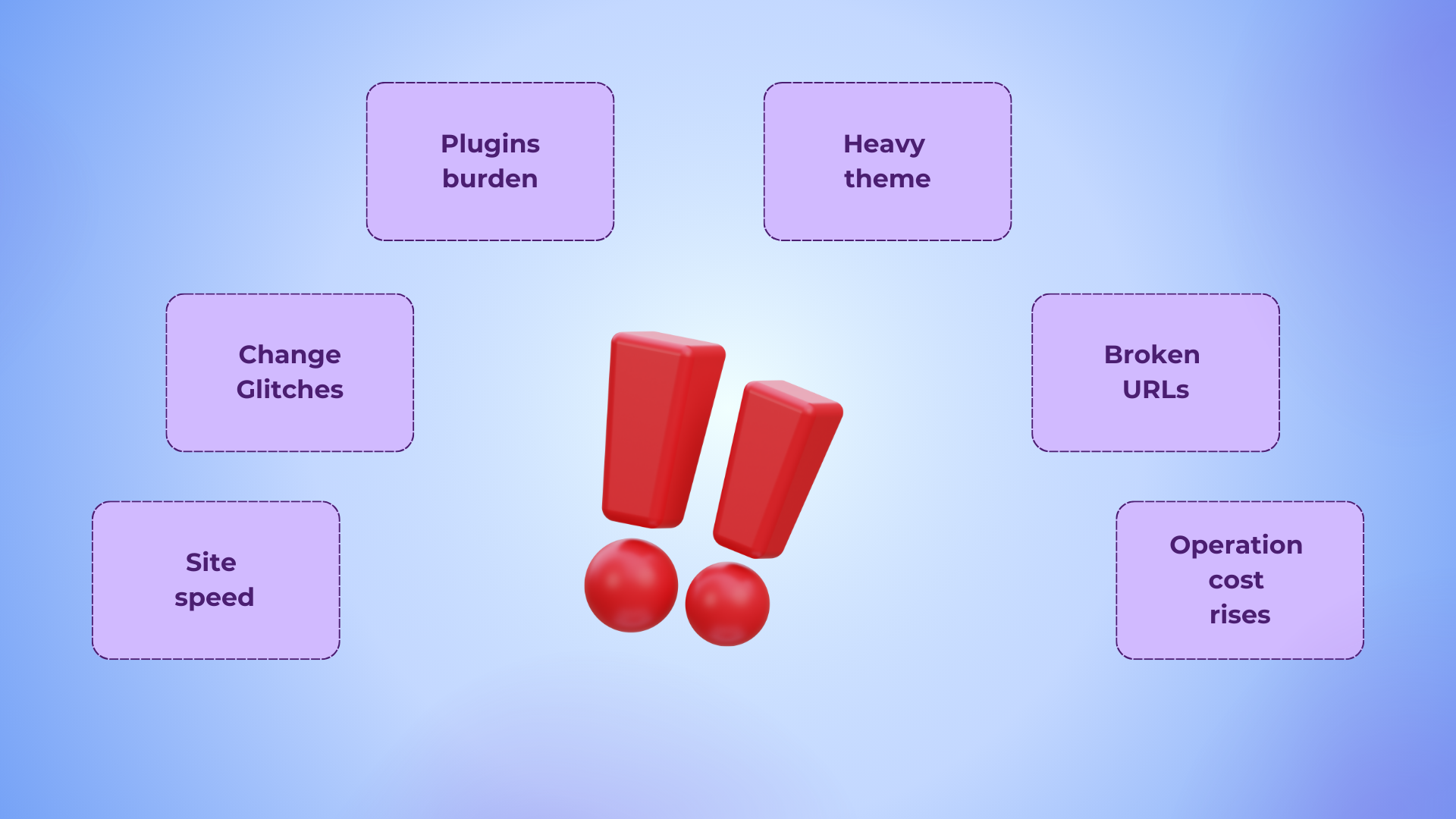
- The site gets slower. Adding new features through apps seems harmless, but it can gradually degrade the site’s performance.
- Small changes to the site require developer help.
- Operational costs rise without matching revenue growth. They could be app subscriptions, maintenance, and bug fixes.
Most merchants accept these issues as “normal growing pains”, assuming every platform behaves this way at scale, but it is not. There are now many eCommerce platforms that are designed to serve different online business demands. As your business expands, it simply needs a more suitable platform to operate on.
From a technician’s perspective, I see that this is when the current platform begins to struggle. It may still look perfect, but behind the scenes, the system is already stretched thin.
When “apps” stop being a solution
The first warning signs merchants usually ignore
Apps and plugins are considered one of the biggest strengths of modern eCommerce platforms, until they become the biggest weakness.
I once worked with a WooCommerce store running more than 25 active plugins. They use each to address specific business needs, including shipping logic, custom pricing, checkout optimization, and reporting. They all seem necessary.
But the problem takes place only when they all work together on a platform. Each plugin adds more database queries, more scripts and styles to load, and more opportunities for conflicts.
In addition, issues don’t often occur during normal traffic, but during a flash sale or a holiday campaign with a sudden traffic spike, they are more likely to occur.
I’ve seen checkout pages fail because two plugins tried to modify the same process. I’ve also seen sites slow to a crawl because tracking scripts stacked up.
Apps are meant to extend a platform rather than become its foundation. Otherwise, the platform has already reached its limits.
The SEO trap no one talks about
SEO-related problems are often not obvious. And that makes them so expensive.
A common scenario in older platforms like Magento is years of SEO history. The stores on these platforms often don’t experience sudden drops in traffic; instead, their rankings slowly decline, and click-through rates dip slightly month by month.
When we investigate from the technical side, we often find issues in:
- Legacy URL structures that are hard to optimize
- Slow page load times that affect Core Web Vitals
- Heavy theme and templates that make it hard for search engines to process.
Normally, by the time merchants notice traffic loss, it already happened months ago.
The real question is not “can I migrate?”
More merchants ask the same question at first: “Is migration risky?” From my experience, a much more important question to ask is: “ What is staying on this platform costing me every month?” The hidden costs often include:
- Lost conversions due to declining performance
- Long development hours spent building workarounds
- Costly marketing campaigns, but limited by technical constraints
- Expansion plans delayed or canceled
I once worked with a merchant who delayed migration for nearly two years. Each month, they paid developers to fix issues rather than switch to another platform. Eventually, when growth made migration unavoidable, it had to be rushed.
Unfortunately, rush migrations are always harder, cost more, and carry more risk.
Migration itself is not the biggest risk. Waiting until you have no choice is!
How experienced merchants know it’s time
Merchants with experience scaling tend to recognize the signs earlier. They don’t wait for breakdowns or let their store burdens go too long. Instead, they watch for resistance, and here is what they pay attention to:
- Whether conversion improves when marketing does: traffic increases and ads perform better.
- Whether the platform supports strategic growth, including B2B pricing, multi-store setups, international SEO, or complex catalogs.
- Whether the tech team works harder not because of bad ideas, but because the platform is not designed for them.
I often tell store owners something like this: When your business is ready to grow, your platform should say yes – not no!
A platform should help you resolve friction, not create it.
What a smart migration looks like (from the inside)
Many people imagine an eCommerce platform migration as a sudden switch: one night, the old store goes offline; the next day, the new one appears. But it is not how professional migrations work.
A smart migration is often tested and controlled gradually. From the inside, it usually involves:
- Staged testing: Migrate and validate data in a safe environment.
- Parallel operation: Businesses continue to run the existing store while the new one is prepared.
- Step-by-step verification: Carefully check orders, customers, SEO URLs, and integrations.
A successful migration comes with no downtime and no SEO loss. In many cases, performance improves immediately after launch.
One mid-size retailer we worked with chose to migrate their store in phases. To their customers, this approach made the change barely noticeable. To their internal team, everything felt just easier.
Migration is not a reset – it’s a release
With all those years of working at Next-Cart and helping hundreds of stores with their migrations, I’ve seen that the best migrations didn’t feel dramatic. They actually felt calm, stable, and relieved.
As a result, pages loaded faster, and teams stopped fighting technical limitations.
In other words, migration doesn’t reset your business, but it releases it from constraints that no longer make sense for where you’re going.
If you’re unsure whether it’s time, start by asking the right questions.
- What is the current platform costing me every month?
- Can we solve problems or just manage limitations?
- If we stay here for two more years, what growth opportunities will we achieve or miss?
The need for migration usually becomes obvious before store owners recognize it. The timely decision will turn migration from a risky reaction into a strategic advantage. And at that point, it’s no longer a technical decision, but simply a business one!